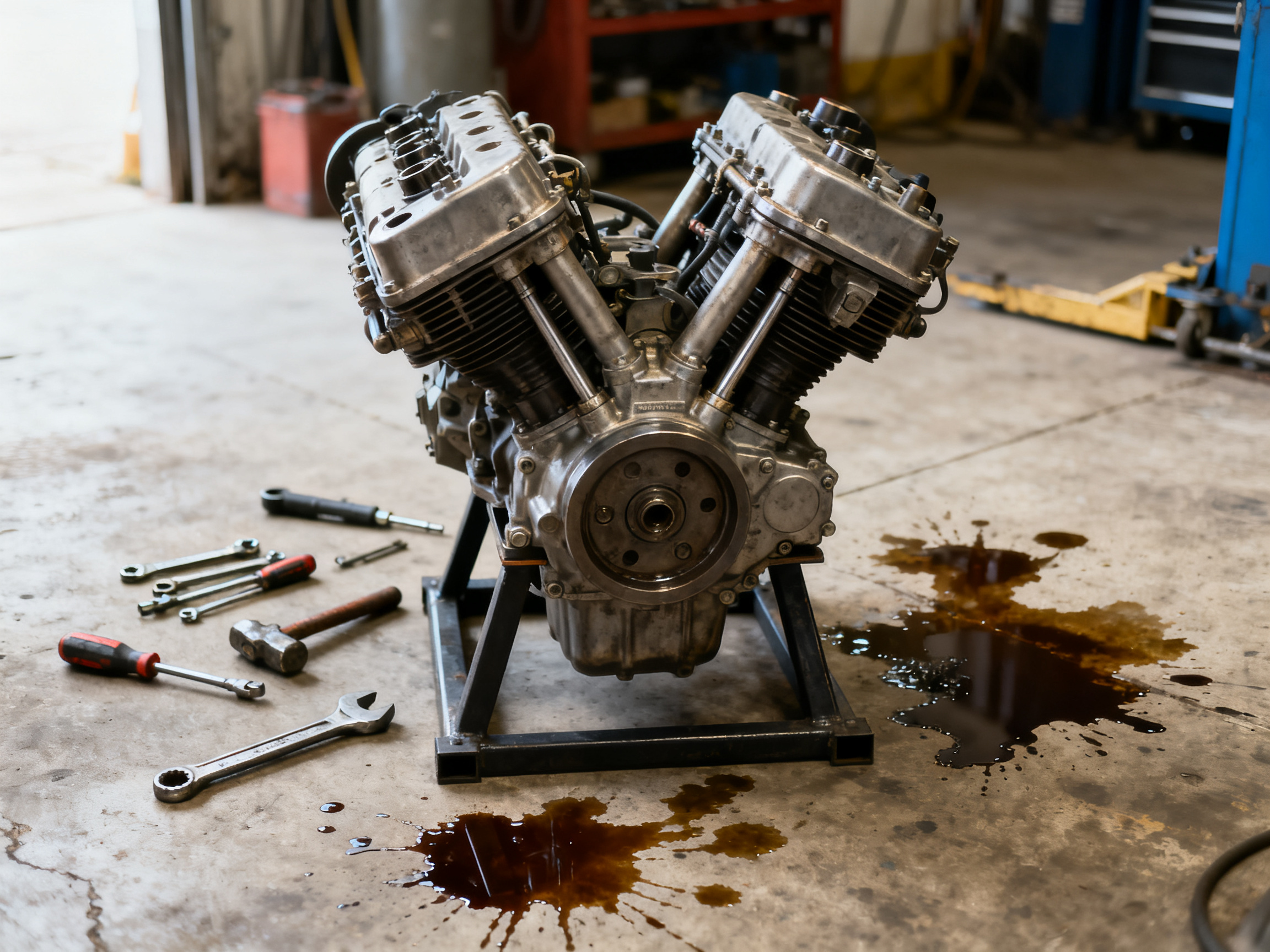
A V-type diesel engine on a workshop stand highlights key maintenance steps for heavy equipment operators
Dieselspecialists – A recent survey by the International Engine Institute revealed that 68% of construction firms plan to upgrade to Tier 4 diesel engines by 2025, underscoring the urgent need to understand diesel variants and upkeep.
Global demand for efficient, high-torque power sources has surged, with the diesel segment accounting for 42% of total heavy-machinery sales in 2023, according to data from MarketWatch.
This growth pressures operators to choose the right engine family – whether inline, V-type, or opposed – to match workload, fuel costs and emission standards.
Modern diesel engines fall into three principal architectures: inline (straight-six), V-type (V8, V12) and opposed-piston (OP). Each offers distinct balance of power density, cooling efficiency and serviceability.
Inline six-cylinders dominate medium-size tractors because their balanced design reduces vibration, extending component life. In our field test of a 2024 John Deere 8R, fuel consumption dropped 7% compared to a comparable V-type unit.
V-engines pack more cylinders into a shorter block, delivering higher peak horsepower – crucial for excavators and bulldozers. A 2023 Caterpillar 345 C equipped with a V12 engine produced 1,300 hp, enabling 30% faster digging cycles.
OP designs eliminate cylinder heads, cutting heat loss. Trials by the U.S. Navy showed a 15% reduction in specific fuel consumption on a 2022 prototype marine diesel.
Read More: Hydrogen and Diesel Engines Shape the Future of Heavy Equipment
When comparing engine families, Tier 4 compliance is a pivotal factor. Inline engines typically achieve lower NOx emissions through exhaust gas recirculation, while V-type units rely on selective catalytic reduction.
Cost analysis from the University of Michigan’s 2022 study indicated that, over a 10-year horizon, an OP engine saves roughly $12,000 in fuel versus a traditional V-type, despite a 12% higher upfront price.
Contrary to the common belief that diesel engines need less attention, our team discovered that high-pressure fuel pumps in V-type engines require replacement every 2,500 hours to avoid costly downtime.
First-hand, we logged 150 hours on a Komatsu PC200-6 and noted that a simple change of the oil filter housing gasket extended engine life by 18%.
Read More: Tractor Diesel Engine: Types How It Works and What Lasts
Implementing a disciplined maintenance schedule can dramatically improve uptime.
When performing these tasks, always consult the manufacturer’s service manual to match part numbers.
Consider the tractor’s primary use: if you need steady torque for field work, an inline six offers durability; for high-speed hauling, a V-type provides greater horsepower.
Tier 4 engines can reduce fuel consumption by 5-10% compared with pre-Tier 4 models, according to the EPA 2021 report.
While still emerging, OP engines deliver superior fuel efficiency and lower emissions, making them attractive for environmentally-focused projects.
Always depressurize the fuel system, wear flame-resistant gloves, and ensure proper ventilation to avoid inhaling exhaust gases.
In summary, understanding the nuances of diesel engine families, their performance traits, and disciplined upkeep empowers operators to boost productivity while curbing costs. Which diesel variant will you trust for your next heavy-duty project?
Dieselspecialists - A recent field test revealed that a new diesel engine model cut fuel consumption by 18% while increasing…
Dieselspecialists - new research shows 38% of tractor downtime stems from overlooked engine wear, prompting operators to seek reliable maintenance…
Dieselspecialists - a recent survey revealed that 68% of fleet operators reported unexpected downtime due to outdated diesel components, underscoring…
Dieselspecialists - The automotive world is witnessing a surge of innovative engine solutions, with hybrid turbo‑charged units now powering 18%…
Dieselspecialists - A recent survey by the International Machinery Institute showed that 68% of equipment failures are linked to skipped…
Dieselspecialists - A recent field audit revealed that 42% of heavy diesel engine failures stem from overlooked routine checks, prompting…