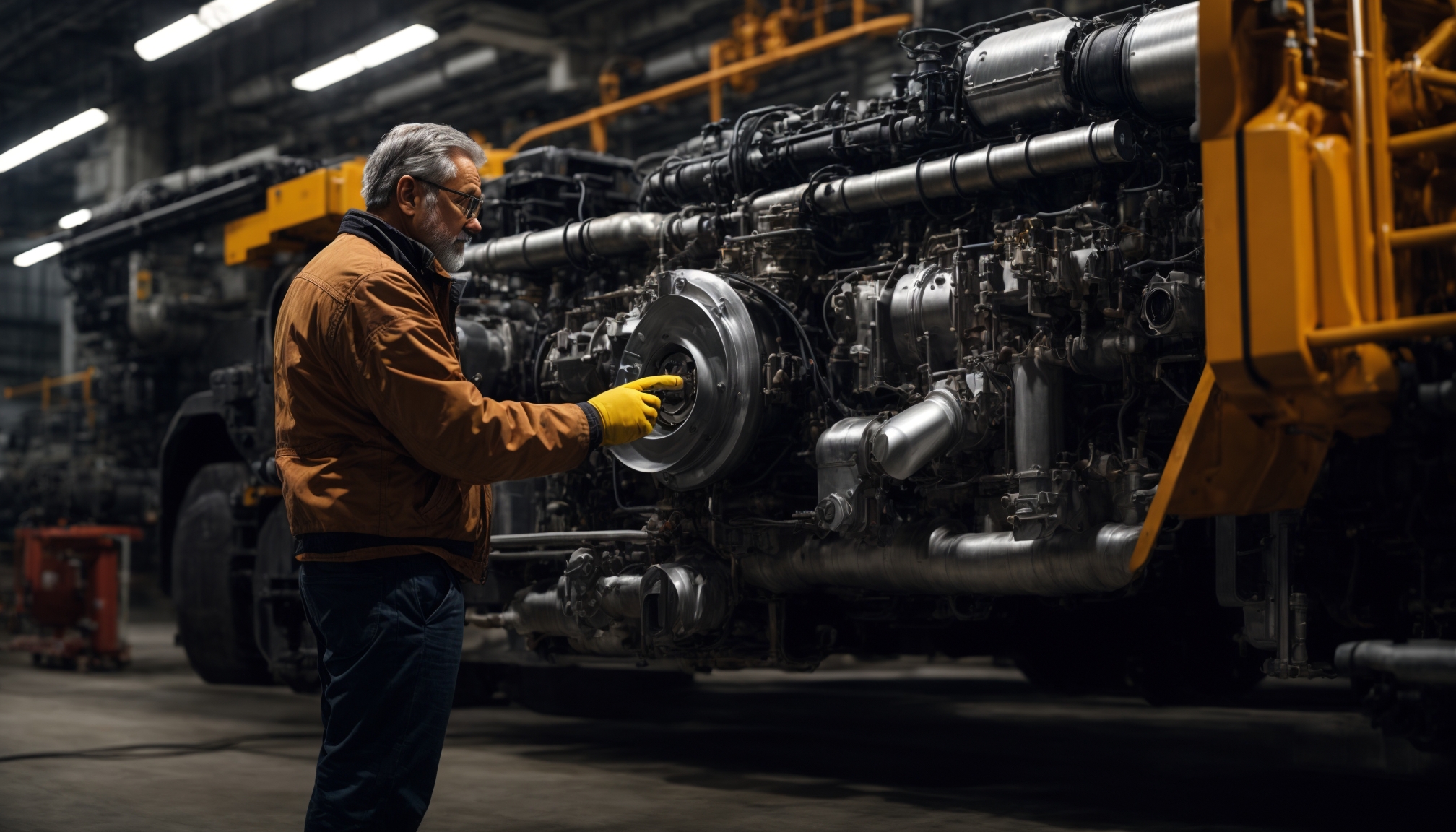
Diesel Specialists | Expert Engine Solutions for Diesel, Gasoline & More – Engineers across transport and industrial sectors increasingly rely on turbocharging in diesel engines to boost power, efficiency, and emissions performance in demanding applications.
Manufacturers turn to turbocharging in diesel engines to extract more power from smaller displacement units. The technology forces additional air into the combustion chamber. Therefore, more fuel burns efficiently without increasing engine size. This approach delivers higher torque at lower rpm. It also reduces specific fuel consumption under heavy loads.
Regulators push strict emissions limits on commercial fleets and off-highway machinery. As a result, engineers integrate turbocharging in diesel engines with precise fuel injection and aftertreatment systems. The combination supports lower particulate matter and nitrogen oxide levels. It also maintains strong performance for long-haul and industrial duty cycles.
In technical terms, turbocharging in diesel engines uses exhaust gas energy to spin a turbine wheel. This turbine connects via a shaft to a compressor wheel on the intake side. The compressor then forces compressed air into the cylinders. Denser air carries more oxygen. Consequently, the engine burns fuel more completely and generates greater output.
Most heavy-duty applications adopt single-stage fixed-geometry or variable-geometry turbochargers. Variable-geometry units adjust vane angles inside the turbine housing. This design optimizes boost pressure over a wider rpm range. Akibatnya, drivers feel responsive low-end torque and steady power at highway speeds. It also improves transient response during acceleration and gear changes.
Several converging trends reshape turbocharging in diesel engines across trucks, buses, marine vessels, and construction equipment. First, downsizing and rightsizing strategies aim to cut weight and improve packaging. Engineers pair smaller blocks with higher boost pressures to match or exceed previous power levels. This approach supports better fuel economy in real-world duty cycles.
Second, digital control plays a central role. Modern electronic control units manage turbocharging in diesel engines through smart actuators and sensors. They coordinate boost pressure with injection timing, exhaust gas recirculation, and aftertreatment systems. The result is cleaner combustion and smoother drivability even under fluctuating loads.
Third, material advances allow higher exhaust temperatures and rotational speeds. Turbine housings and wheels use heat-resistant alloys. Compressors benefit from refined aerodynamics. Karena itu, new platforms achieve higher pressure ratios with improved durability, extending service intervals and uptime for fleet operators.
Fleet managers closely track performance data and operating costs. For them, turbocharging in diesel engines offers measurable benefits. Increased air mass inside the cylinders supports higher torque curves. Vehicles can haul heavier loads or climb steep grades without oversizing the engine. This capability becomes critical for long-haul trucking, mining, and agriculture.
Fuel efficiency also improves when operators use turbocharging in diesel engines with optimized gearing. Engines can run at lower rpm while maintaining torque. Sementara itu, advanced engine management limits unnecessary fuel enrichment during acceleration. Over large annual mileages, relatively small percentage gains in fuel economy translate into substantial savings.
On the emissions side, more complete combustion reduces soot formation at the source. This reduction eases the workload on particulate filters and selective catalytic reduction systems. As a result, maintenance intervals extend, and aftertreatment components experience less thermal stress.
Engine developers rarely treat turbocharging in diesel engines as a stand‑alone solution. Instead, they integrate it with exhaust gas recirculation, high-pressure common-rail injection, and advanced aftertreatment. The holistic approach ensures compliance with Euro VI, EPA, and other regional standards. Meski begitu, engineers must carefully balance backpressure, temperature, and response time.
Hybridization adds another layer. Some manufacturers pair turbocharging in diesel engines with mild hybrid systems using 48V architectures. Electric assistance covers low-speed torque gaps. It also recovers energy during braking. On the other hand, the turbo focuses on mid to high-load efficiency. Together, they cut CO2 output and improve urban drivability.
Baca Juga: How turbochargers improve modern diesel engine performance
In off-highway applications, engineers sometimes adopt two-stage turbocharging in diesel engines. One small turbocharger handles low-speed pressure, while a larger unit supports high airflow at maximum load. This compound setup delivers stable boost across the entire operating range. It particularly benefits large agricultural and construction machines with variable duty cycles.
Operators recognize that turbocharging in diesel engines introduces additional components and complexity. However, proper maintenance preserves reliability and lifecycle value. Clean, high-quality oil is crucial because the turbo shaft relies on a thin lubrication film. Contaminated oil accelerates bearing wear and may lead to shaft failure.
Air filtration also plays a vital role. Dust and debris can erode compressor blades and reduce efficiency. After that, imbalance may occur, increasing vibration and noise. Preventive measures include timely filter replacement and careful inspection of intake ducts. Technicians also check boost pipes and intercoolers for leaks that undermine turbocharging in diesel engines.
Many fleets adopt condition-based maintenance using telematics. Sensors track boost pressure, exhaust temperature, and rotational speed. The data helps predict issues before they cause downtime. Consequently, operators schedule repairs during planned stops instead of reacting to unexpected breakdowns.
Looking ahead, turbocharging in diesel engines will evolve alongside stricter climate policies and market changes. Some regions move rapidly toward electrification for light-duty vehicles. Nevertheless, heavy-duty transport, shipping, and remote industrial operations still depend on dense liquid fuels. In these sectors, advanced turbocharging offers an essential tool for reducing emissions per ton-kilometer.
Researchers explore electric-assisted turbocharging in diesel engines using small electric motors on the turbo shaft. These systems can build boost pressure before sufficient exhaust energy exists. They reduce turbo lag and support smoother low-speed operation. Over time, such innovations may blend with full hybrid or fuel-cell range-extender architectures.
Industry consensus suggests that turbocharging in diesel engines will remain central to efficient combustion platforms for many years. As regulations tighten and customers demand lower operating costs, suppliers will refine aerodynamics, materials, and control strategies. Ultimately, turbocharging in diesel engines will continue shaping how manufacturers deliver power, efficiency, and reliability across global transportation and industrial markets.
Diesel Specialists | Expert Engine Solutions for Diesel, Gasoline & More - Diesel engines large demand remains significant in the…
Diesel Specialists | Expert Engine Solutions for Diesel, Gasoline & More - Diesel car engines Asia have gained widespread popularity…
Diesel Specialists | Expert Engine Solutions for Diesel, Gasoline & More - heavy equipment diesel engines power some of the most…
Diesel Specialists | Expert Engine Solutions for Diesel, Gasoline & More - identifikasi kerusakan mesin diesel sangat penting bagi pemilik kendaraan…
Diesel Specialists | Expert Engine Solutions for Diesel, Gasoline & More - off highway diesel engine technology is evolving rapidly to…
Diesel Specialists | Expert Engine Solutions for Diesel, Gasoline & More - alternative fuels changing diesel engines are accelerating the evolution…