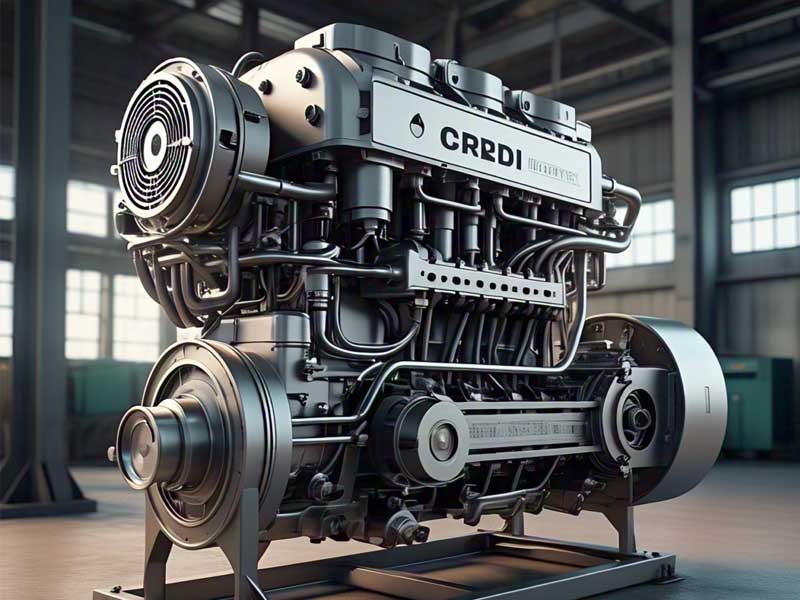
Dieselspecialists – Diesel Technology has long been recognized for its durability, fuel efficiency, and ability to generate high torque, making it the preferred choice for heavy-duty vehicles, industrial machinery, and marine applications. Since its invention by Rudolf Diesel in the late 19th century, diesel engines have continuously evolved to meet the increasing demands of transportation and industry.
In the past, diesel engines were primarily valued for their ability to handle demanding workloads while consuming less fuel than gasoline engines. However, as environmental concerns grew, Diesel Technology faced criticism due to high emissions of nitrogen oxides (NOx) and particulate matter. This scrutiny led to a push for innovation, with manufacturers striving to create cleaner and more efficient diesel engines.
“HMC Champion Mod: The Honda PCX160”
Diesel Technology has undergone significant advancements to address environmental concerns. One of the most notable improvements is the integration of Common Rail Direct Injection (CRDI) systems. This technology optimizes fuel delivery by injecting fuel at higher pressures and in precise amounts, leading to better combustion efficiency and reduced waste.
In addition to CRDI, emission control technologies like Selective Catalytic Reduction (SCR) and Diesel Particulate Filters (DPF) have played a crucial role in minimizing pollutants. SCR technology reduces nitrogen oxide emissions by converting them into harmless nitrogen and water vapor. While DPF captures and burns off particulate matter. These innovations have significantly lowered diesel engine emissions, allowing them to comply with stringent global environmental regulations.
Despite the rise of electric and hybrid vehicles, Diesel Technology continues to evolve. Manufacturers are exploring the use of renewable diesel fuels and hydrogen-based combustion to further reduce carbon footprints. Advances in turbocharging, engine downsizing, and hybrid diesel-electric systems also promise to enhance efficiency while maintaining power and reliability.
As the automotive and industrial sectors shift towards sustainability, Diesel Technology remains an integral part of the global energy landscape. By embracing innovation and adapting to environmental standards. Diesel engines continue to prove their relevance in a cleaner, more efficient future.
“Sydney Opera House: A Landmark of Struggle and Triumph”
Dieselspecialists - The automotive world is witnessing a surge of innovative engine solutions, with hybrid turbo‑charged units now powering 18%…
Dieselspecialists - A recent survey by the International Machinery Institute showed that 68% of equipment failures are linked to skipped…
Dieselspecialists - A recent field audit revealed that 42% of heavy diesel engine failures stem from overlooked routine checks, prompting…
Dieselspecialists - Heavy-duty manufacturers are racing to cut fuel consumption after a recent study revealed a 12% average waste in…
Dieselspecialists - Operators of large diesel machines face a steep learning curve, yet a recent study by the International Equipment…
Dieselspecialists - Heavy‑duty construction firms are scrambling to select the right powerplant as demand for larger equipment surges, with 2023…