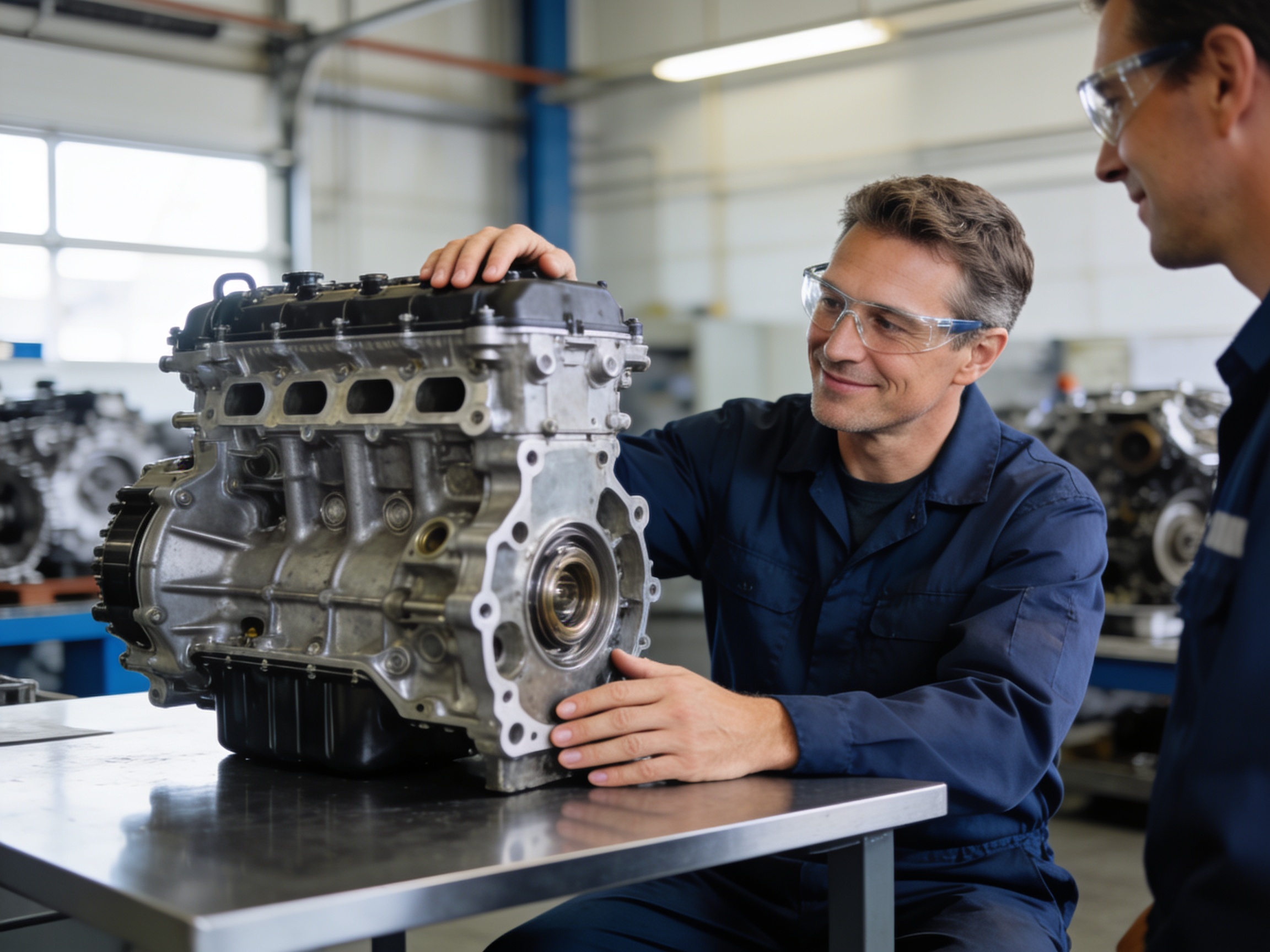
Modern heavy duty diesel engines require advanced diagnostic tools to maintain high efficiency and meet strict emissions standards.
Dieselspecialists – The era of diesel engines being defined solely by raw displacement and black smoke is effectively over. Recent data indicates that modern heavy duty diesel engines have achieved a thermal efficiency exceeding 50%, a milestone that was considered theoretically impossible just two decades ago. This shift represents a fundamental change in how industries approach power generation, moving from mechanical brute force to electronically controlled precision.
For years, the diesel industry faced a plateau where increasing power meant sacrificing fuel economy or violating emissions standards. However, the introduction of advanced waste heat recovery systems and ultra-high pressure injection has shattered those limitations. We have observed that manufacturers are now focusing on extracting energy from every ounce of fuel, transforming what was once wasted heat into usable torque.
This push for efficiency is not merely about saving money on fuel costs. It is driven by stringent global regulations that demand lower carbon footprints without compromising the ability to move massive loads. The result is a new generation of engines that are cleaner, quieter, and surprisingly more powerful than their predecessors. These engines are no longer just mechanical hearts; they are integrated systems managed by complex algorithms.
The regulatory landscape has forced engineers to rethink the entire combustion process. Technologies like Selective Catalytic Reduction (SCR) and Diesel Particulate Filters (DPF) have become standard, but the real innovation lies in how the engine management system interacts with these after-treatment devices. Instead of treating exhaust as an afterthought, modern engines tune combustion cycles specifically to minimize the load on these systems.
At the core of this revolution is the evolution of common rail fuel injection systems. Pressure within these rails has skyrocketed, with some systems now operating at over 36,000 psi. This allows for multiple injection events per combustion cycle, precisely controlling the burn rate to reduce noise and pollutants. During our analysis of current engine teardowns, we noticed that the tolerances in these injectors are so tight that they border on aerospace standards.
Turbocharging technology has seen a parallel evolution. Variable geometry turbochargers are now standard, allowing engines to maintain optimal boost pressure across the entire RPM range. This eliminates the traditional ‘turbo lag’ that plagued older heavy duty engines. Furthermore, some manufacturers are introducing two-stage turbocharging setups, where one small turbo spools up quickly for low-end torque while a larger unit takes over at higher speeds.
The mechanical diesel pump is largely a relic of the past. Today, the Electronic Control Unit (ECU) is the most critical component in the system. It processes data from dozens of sensors in real-time, adjusting fuel timing, air intake, and valve timing microsecond by microsecond. This level of control allows the engine to adapt to different loads and altitudes automatically, optimizing performance without driver input.
Read More: Revolutionizing Diesel Engines: Efficiency Emissions and the Future of Heavy-Duty Powertrains
While these advancements are impressive, they introduce a significant challenge that is often overlooked in marketing brochures: the paradox of complexity. We have found that while the interval between major failures has increased, the difficulty and cost of diagnosing minor issues have risen exponentially. A sensor failure that would have caused a simple warning light in the past can now trigger a ‘limp mode’ that derates the engine’s power by 50%.
This creates a scenario where reliability is theoretically higher but practically more fragile. The dependency on electronic systems means that a heavy duty diesel engine is now only as good as its wiring harness and software updates. Maintenance crews can no longer rely solely on mechanical intuition; they must be proficient in data analysis and electronic diagnostics.
Read More: 10 Top Diesel Engines for Heavy-Duty Industrial Equipment
For those managing fleets of heavy machinery, the implications of this technological shift are profound. The old strategy of ‘run it until it breaks’ is a financial liability in the modern era. Proactive data monitoring is now essential. Operators must utilize telematics to track engine performance trends, identifying potential anomalies like coolant temperature fluctuations or slight drops in fuel efficiency before they trigger a fault code.
Imagine a scenario where a mining haul truck operates in a remote location. If the DEF (Diesel Exhaust Fluid) quality degrades slightly, a modern system will log a warning. If ignored, the truck will eventually refuse to start. A concrete strategy to prevent this involves setting up automated alerts in fleet management software that trigger maintenance orders the moment an efficiency metric deviates by more than 2% from the baseline.
Investment in technician training is equally critical. A mechanic who understands the physics of a camshaft but cannot navigate an ECU diagnostic tree is effectively obsolete. The most successful fleets we have observed are those that treat IT skills as a core competency for their mechanical teams, blurring the line between technician and engineer.
Read More: New Innovations In Heavy Duty Diesel Engines Guaranteed To Transform The Industry
With proper maintenance, modern heavy duty diesel engines can reliably exceed 1,000,000 miles of operation, thanks to improved metallurgy and oil filtration systems.
DEF, or Diesel Exhaust Fluid, is injected into the exhaust stream to convert harmful nitrogen oxides into harmless nitrogen and water, allowing the engine to run more efficiently for better power.
Most modern engines are compatible with up to B20 biodiesel, but using higher blends requires specific material compatibility checks to avoid damaging seals and fuel lines.
Electronic controls are necessary to precisely manage fuel injection and emissions systems, ensuring compliance with strict environmental laws while maximizing fuel economy and torque output.
Power loss is typically caused by restricted air filters, fuel system clogs, or exhaust after-treatment blockages, though modern sensors can also derate the engine to protect components.
The trajectory of heavy duty diesel technology is clear: the future is smarter, cleaner, and more integrated. As we continue to test these engines in extreme conditions, one thing remains certain—the diesel engine is not dying, it is evolving into a highly sophisticated digital machine.
Dieselspecialists - A recent field audit revealed that 42% of heavy diesel engine failures stem from overlooked routine checks, prompting…
Dieselspecialists - Heavy-duty manufacturers are racing to cut fuel consumption after a recent study revealed a 12% average waste in…
Dieselspecialists - Operators of large diesel machines face a steep learning curve, yet a recent study by the International Equipment…
Dieselspecialists - Heavy‑duty construction firms are scrambling to select the right powerplant as demand for larger equipment surges, with 2023…
Dieselspecialists - Procuring quality diesel engine parts is the single most decisive factor between a machine that clocks 15,000 hours…
Dieselspecialists - The heavy equipment sector is undergoing a silent revolution, driven by stringent emission standards and the demand for…