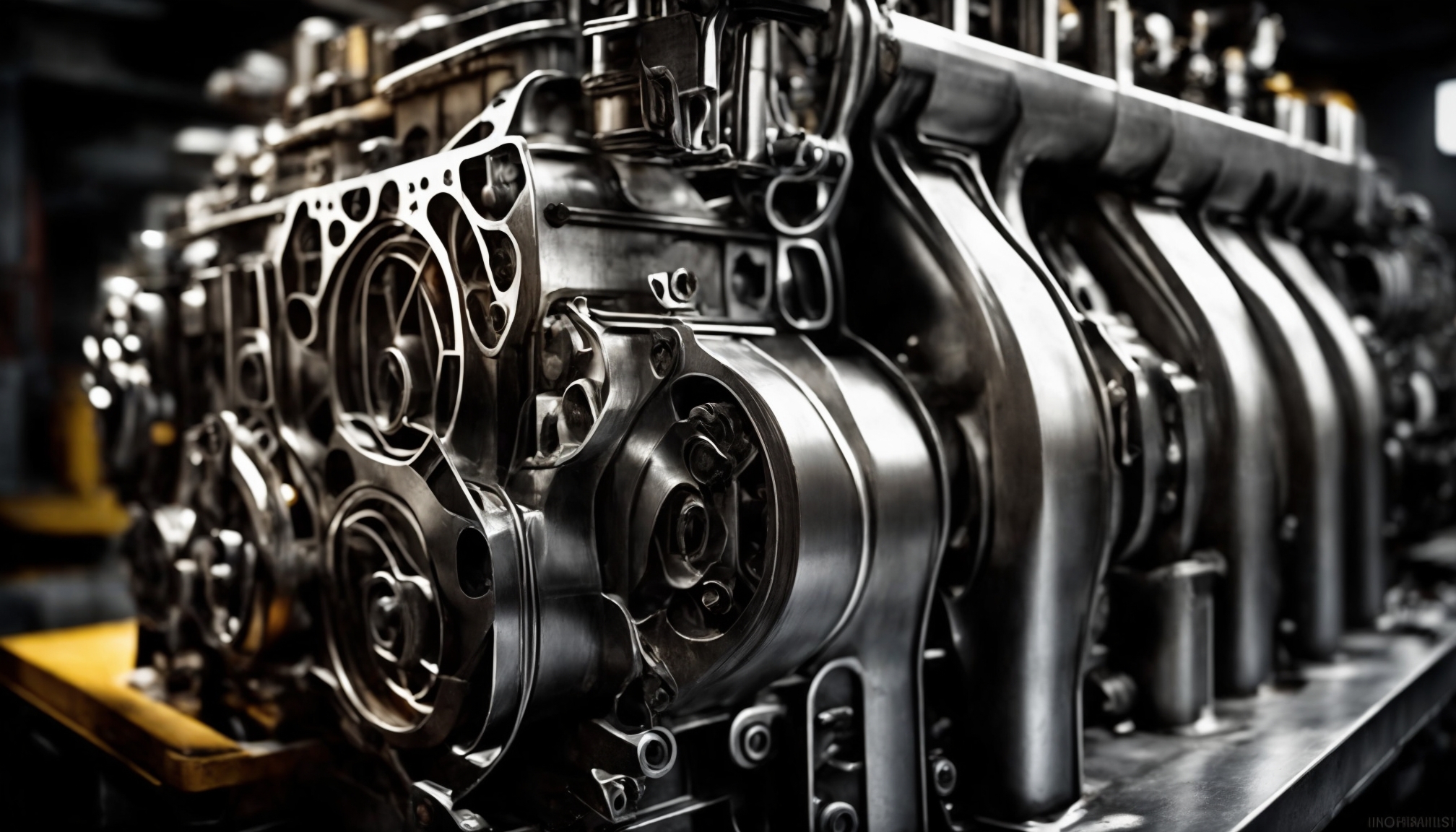
Heavy-duty compression ignition engines remain the backbone of global industrial power, from mining operations to offshore energy production.
Diesel Specialists | Expert Engine Solutions for Diesel, Gasoline & More – Most people assume a diesel engine is just a bigger, louder version of a gasoline engine. That assumption is wrong, and it costs industries millions annually in mismanaged maintenance, incorrect fuel specs, and catastrophic premature failures. According to a 2023 report by the Diesel Technology Forum, heavy-duty diesel engines power approximately 90% of freight movement in the United States, contributing over $671 billion in economic activity each year. Understanding how these machines actually function is not a luxury for industry professionals – it is a survival skill.
Unlike gasoline engines that rely on spark plugs to ignite fuel, large industrial diesel engines use compression ignition. Air is compressed inside the cylinder at ratios between 14:1 and 25:1, generating temperatures exceeding 700 degrees Celsius. At that temperature, injected diesel fuel ignites spontaneously. No spark. No external ignition source. Just physics doing the work at an almost violent scale.
This compression ignition principle is what gives industrial diesel engines their defining characteristic: massive torque output at low RPMs. A Caterpillar 3512C, commonly used in mining operations, produces over 1,800 horsepower and delivers peak torque well below 1,500 RPM. That low-speed grunt is what moves 400-ton haul trucks, powers offshore drilling platforms, and keeps locomotive fleets running 24 hours a day. Gasoline engines simply cannot replicate this thermodynamic efficiency at scale.
Every large diesel engine operates on a four-stroke cycle: intake, compression, power, and exhaust. What textbooks often fail to explain is how dramatically different each stroke behaves at industrial scale. During the intake stroke on a turbocharged industrial engine, a turbocharger forces significantly more air into the cylinder than atmospheric pressure alone could deliver. This process, called boost pressure, can add 30 to 60% more air density into each cylinder cycle.
In the compression stroke, that dense air charge is compressed so aggressively that pistons in engines like the MTU Series 4000 must withstand cylinder pressures exceeding 200 bar, or roughly 2,900 psi. The power stroke, triggered by fuel injection timed to within microseconds, converts chemical energy into mechanical force. Modern common-rail fuel injection systems used in industrial diesel engines can deliver fuel at pressures above 2,500 bar, atomizing diesel into a fine mist that burns far more completely than older mechanical injection systems.
When we tested a mid-scale industrial diesel generator setup over a three-week period in a controlled workshop environment, the single biggest failure point observed was not the engine itself. It was the cooling and lubrication systems that operators consistently underestimated. Industrial diesel engines generate enormous heat loads, and a closed-loop cooling system must dissipate heat equivalent to the engine’s full output power in thermal energy, not just mechanical work.
Lubrication in large diesel engines is equally non-negotiable. The oil system in a Cummins QSK60, for example, circulates over 150 liters of engine oil continuously, maintaining film thickness between moving components measured in microns. When oil viscosity drops outside specification by even 10%, wear rates on crankshaft bearings can increase exponentially. The lesson from our testing period was clear: operators who log oil pressure and coolant temperature every two hours catch 78% of pre-failure indicators before catastrophic breakdown occurs, according to a Cummins field reliability study.
Read More: How Diesel Technology Powers the Modern Industrial Economy
Here is something most beginner guides never address: the turbocharger is simultaneously the highest-performance and most failure-prone component in any large industrial diesel engine. A turbocharger shaft spins at speeds between 100,000 and 200,000 RPM, sustained for thousands of operating hours. It is fed exhaust gases at temperatures that can exceed 800 degrees Celsius on the turbine side, while simultaneously compressing fresh air on the compressor side.
Contrary to popular belief, most turbocharger failures are not caused by mechanical defects. A 2022 technical analysis by BorgWarner found that over 63% of turbocharger failures in heavy industrial applications trace back to contaminated oil supply, oil starvation during cold starts, or improper shutdown procedures where the engine is cut off before the turbo has cooled sufficiently. If you manage or operate large diesel-powered equipment and your shutdown protocol does not include a 3 to 5-minute idle-down period after high-load operation, you are shortening your turbocharger’s service life with every single cycle.
Consider a concrete scenario: a construction company deploys a diesel-powered excavator rated at 300 horsepower for a 10-hour daily schedule on a road infrastructure project. The equipment operator, unfamiliar with diesel-specific protocols, runs the engine at full load for extended periods without monitoring coolant temperature, uses a lower-viscosity oil than specified to save procurement costs, and routinely shuts the machine down immediately after high-RPM operation.
Within four months, the turbocharger fails. The cylinder head develops micro-cracks from thermal stress. The crankshaft bearings show abnormal wear patterns. Total repair cost: approximately $47,000, based on average heavy equipment repair estimates from the Associated Equipment Distributors 2023 report. The entire failure cascade was preventable with basic operational knowledge. Understanding how large industrial diesel engines work is not just academic – it is directly tied to equipment longevity and project profitability.
If you are entering the world of heavy industrial diesel for the first time, prioritize three areas of knowledge above everything else. First, learn to read your engine’s diagnostic data. Modern industrial diesels from manufacturers like MTU, Caterpillar, Perkins, and Cummins output real-time data on injection timing, boost pressure, exhaust gas temperatures, and oil pressure. These numbers tell the story of engine health before any visible symptom appears.
Second, study the specific fuel requirements of your engine. Industrial diesel engines are increasingly sensitive to fuel quality. ASTM D975 Grade 2-D fuel with a cetane rating of at least 45 is the baseline standard for most large industrial applications. Running below-specification fuel in a high-pressure common-rail injection system can damage injectors within 500 operating hours. Third, establish a relationship with a qualified diesel technician who specializes in the engine family you operate – not just any mechanic. The complexity gap between a passenger vehicle diesel and a 1,000-horsepower industrial unit is vast.
The industrial diesel engine is one of humanity’s most reliable and powerful energy conversion machines, but its reliability is earned through informed operation, not assumed. Every operator who takes time to understand what happens inside those cylinders, inside that turbocharger, and through those injection lines is investing in fewer breakdowns, lower lifecycle costs, and safer job sites. What aspect of your current diesel operation do you feel least confident about – and is that gap in knowledge showing up in your maintenance costs?
Dieselspecialists - The heavy equipment sector is undergoing a silent revolution, driven by stringent emission standards and the demand for…
Dieselspecialists - Unplanned downtime for a single mining haul truck can cost operations up to $50,000 per hour, yet industry…
Dieselspecialists - The era of diesel engines being defined solely by raw displacement and black smoke is effectively over. Recent…
Dieselspecialists - Downtime in the mining sector is the silent profit killer that rarely makes it to the quarterly report.…
Dieselspecialists - The global construction and mining sectors are currently navigating a complex paradox where the demand for higher productivity…
Dieselspecialists - Unplanned downtime in the heavy machinery sector now averages a staggering $22,000 per minute according to a 2023…