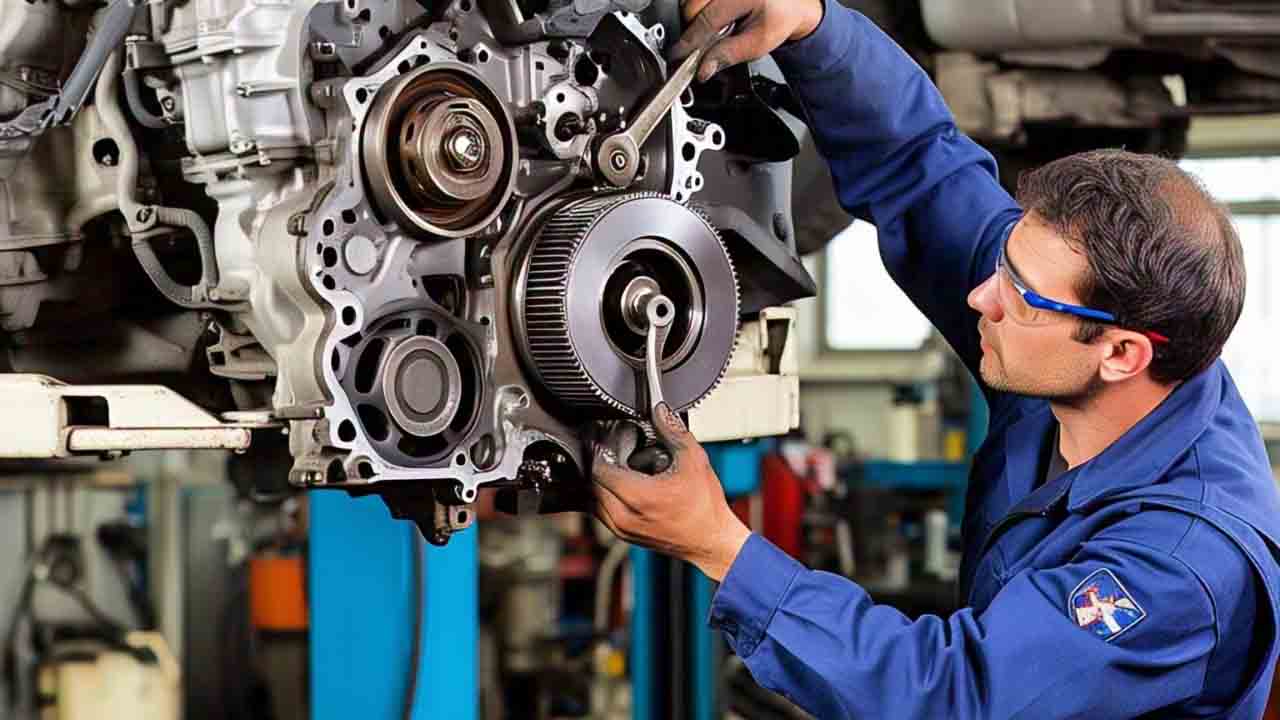
Dieselspecialists – Diesel repairs are entering a new era with the introduction of cutting-edge additive manufacturing (AM) technology, commonly known as 3D printing. This innovative approach, spearheaded by major players like Pratt & Whitney, is transforming how engine components are restored and maintained. By leveraging AM, companies are now able to reduce repair times by over 60%, drastically improving efficiency while lowering reliance on traditional supply chains.
Traditionally, diesel repairs have relied heavily on manual labor, extensive downtime, and complex logistics to source replacement parts or perform complex machining. These challenges are especially critical in sectors where diesel engines are the backbone—transportation, construction, and energy generation.
Additive manufacturing flips this narrative. Rather than replacing entire engine components or waiting for parts from distant suppliers, repair teams can now reproduce or restore worn-out elements with pinpoint accuracy using 3D printing methods. The result? Engines get back into operation faster, and businesses save significantly on time and cost.
“Yamaha Gear Ultima: The Ultimate Adventure Scooter”
One of the most notable advancements comes from aerospace and defense manufacturer Pratt & Whitney. The company has successfully implemented additive manufacturing in its repair processes, achieving more than a 60% reduction in turnaround time for complex engine parts.
By using AM, Pratt & Whitney can restore components layer by layer. Which not only ensures high precision but also strengthens the integrity of the parts being repaired. This shift not only minimizes waste and transportation needs but also positions AM as a sustainable solution in the world of diesel engine maintenance.
As global industries push for faster, more efficient solutions. Diesel repairs powered by additive manufacturing are likely to become the norm rather than the exception. The implications extend beyond just speed reduced carbon footprints. Lower operating costs, and less dependency on vulnerable supply chains are all part of the equation.
While the technology is still evolving, early adoption by leaders like Pratt & Whitney signals a clear direction. The future of diesel repairs lies in innovation, and 3D printing is leading the way. As more industries follow suit, diesel engine maintenance will become smarter, faster, and more adaptable than ever before.
“Bloomers Make a Comeback: The 19th Century Trend”
Dieselspecialists - A recent field audit revealed that 42% of heavy diesel engine failures stem from overlooked routine checks, prompting…
Dieselspecialists - Heavy-duty manufacturers are racing to cut fuel consumption after a recent study revealed a 12% average waste in…
Dieselspecialists - Operators of large diesel machines face a steep learning curve, yet a recent study by the International Equipment…
Dieselspecialists - Heavy‑duty construction firms are scrambling to select the right powerplant as demand for larger equipment surges, with 2023…
Dieselspecialists - Procuring quality diesel engine parts is the single most decisive factor between a machine that clocks 15,000 hours…
Dieselspecialists - The heavy equipment sector is undergoing a silent revolution, driven by stringent emission standards and the demand for…